

Investing in commercial property can be a lucrative venture, offering substantial financial rewards. Potential benefits include significant returns on investment, steady cash flow from rental income, and long-term asset appreciation. Commercial real estate investments also offer diversification within a portfolio and can act as a hedge against inflation. Understanding the various property types available, like office buildings, retail spaces, and industrial properties, is crucial for maximizing these potential benefits. Careful consideration of factors such as location, lease terms, and market conditions is essential for successful commercial property investment.
However, like any investment, commercial property carries inherent risks. These can include market fluctuations, vacancy rates, property management challenges, and potential environmental liabilities. Furthermore, financing a commercial property investment often requires substantial capital outlay and can involve complex loan agreements. A comprehensive understanding of these risks, combined with thorough due diligence and a well-defined investment strategy, is paramount for mitigating potential losses and achieving success in the commercial real estate market. Navigating these complexities requires careful planning and informed decision-making.
Higher Income Potential
Commercial properties generally offer the potential for higher rental income compared to residential properties. This is due to factors such as longer lease terms, which provide income stability, and the ability to negotiate lease agreements that include rent escalations, protecting against inflation.
Additionally, commercial tenants often bear responsibility for expenses like property taxes, insurance, and maintenance, further enhancing the net operating income for the property owner. This can lead to a higher return on investment (ROI) over the long term.
Diversifying Your Portfolio
Commercial property can be a powerful tool for diversification. Including it in a portfolio alongside stocks and bonds can help reduce overall portfolio volatility. This is because real estate often performs differently than other asset classes, meaning it might appreciate when stocks decline, offering a buffer against market fluctuations.
Diversification within commercial real estate itself is also important. Don’t put all your eggs in one basket. Consider investing across different property types, like office buildings, retail spaces, or industrial warehouses. Geographic diversification is equally crucial. Spreading investments across various locations helps mitigate risks associated with regional economic downturns or localized market issues.
Long-Term Leases Stability
One of the most attractive features of commercial property investment is the potential for stable, long-term income. Long-term leases, often spanning five or ten years or more, provide a predictable income stream, allowing investors to forecast cash flow with greater certainty. This stability can be particularly appealing compared to residential properties, which often have shorter lease terms and higher turnover rates.
This predictable income can be a significant advantage for investors seeking stable returns and reduced risk. It allows for easier financial planning and can make securing financing for future investments less complex. However, it’s important to note that while long-term leases offer stability, they also limit flexibility. Negotiating rent increases or changing tenants can be challenging during the lease term.
Assessing Commercial Market Trends

Accurately assessing commercial market trends is crucial for successful property investment. Understanding these trends allows investors to identify emerging opportunities and mitigate potential risks.
Key factors to consider include occupancy rates, rental growth projections, and local economic conditions. Analyzing these factors helps determine the current market cycle and predict future performance. Due diligence is essential in this process.
Monitoring market trends should be an ongoing process. Shifts in demographics, technology, or regulatory environments can significantly impact property values and investment returns.
Understanding Higher Initial Costs
Commercial property investment often involves significantly higher initial costs compared to residential properties. This includes the purchase price, which is typically greater due to the size and location of commercial spaces.
Beyond the purchase price, investors should anticipate additional upfront expenses. These can include renovation or build-out costs to customize the space for tenants, legal fees associated with the transaction, and potentially higher property taxes and insurance premiums.
Due diligence is crucial. Conduct thorough research and assessments to accurately estimate these initial costs and ensure the investment aligns with your financial capabilities and expected returns.
Complexity in Management
Commercial property investment presents unique management challenges compared to residential properties. Active management is often required, encompassing tasks such as tenant acquisition, lease negotiations, and property maintenance. These responsibilities can be time-consuming and demand specialized knowledge.
Furthermore, legal and regulatory compliance adds another layer of complexity. Understanding zoning laws, building codes, and environmental regulations is crucial for successful management. Failing to comply can lead to significant financial penalties.
Evaluating Tenant Risks
Tenant risk assessment is crucial in commercial property investment. A defaulting tenant can significantly impact your return on investment. Evaluating potential tenants involves several key factors.
Financial stability is paramount. Analyze the tenant’s credit history, financial statements, and business model to gauge their ability to meet rent obligations. Consider their industry and market position as well.
The tenant’s business reputation is also important. Research their track record and longevity in the market. A history of legal disputes or ethical concerns can be a red flag.
Finally, the lease agreement terms themselves carry risk. Carefully review the length of the lease, rent escalation clauses, and options to renew. A shorter lease term offers flexibility but can also lead to higher vacancy rates.
Navigating Regulatory Requirements
Commercial property investment is subject to a complex web of regulations. Zoning laws dictate permitted land use, impacting property development and potential. Building codes set standards for construction, ensuring safety and accessibility. Environmental regulations govern issues like waste disposal and pollution control, influencing operational costs and potential liabilities.
Due diligence is crucial. Investors must carefully research and understand applicable regulations before committing capital. Non-compliance can lead to significant financial penalties and project delays.
Planning Exit Strategies
A crucial aspect of commercial property investment involves planning your exit strategy. Pre-determined exit strategies allow investors to capitalize on favorable market conditions or mitigate potential losses. Various factors influence the chosen strategy, including market trends, investment goals, and the property’s performance.
Common exit strategies include selling the property outright, executing a 1031 exchange to defer capital gains taxes, or refinancing to pull out equity. Lease expiration can also serve as a natural exit point, providing an opportunity to renegotiate lease terms or find new tenants.
Careful consideration of these strategies during the initial investment phase is essential for maximizing returns and minimizing risks.
Deciding if Commercial Investment Fits Your Goals
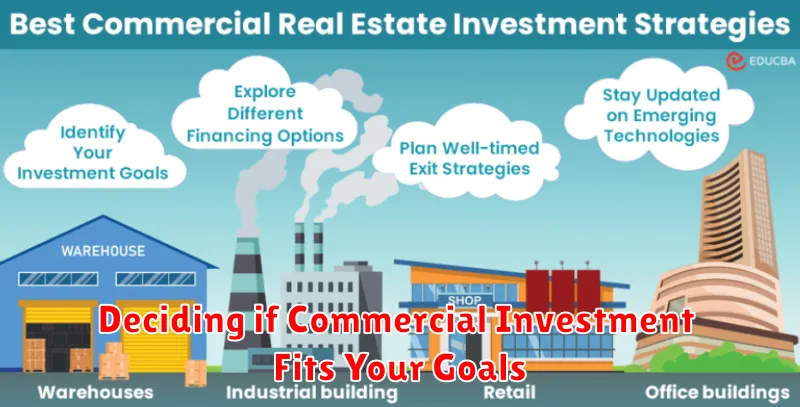
Commercial real estate can be a lucrative investment, but it’s crucial to align it with your overall financial objectives. Carefully consider your investment timeframe. Are you looking for short-term gains or long-term growth?
Risk tolerance is another key factor. Commercial property investment carries different risks than residential, including longer vacancy periods and higher maintenance costs. Evaluate your comfort level with potential fluctuations in income and expenses.
Finally, define your investment strategy. Are you looking for passive income through leases or more hands-on involvement with property development? Understanding your goals and resources will help determine if commercial investment is the right path for you.
